Walter Baier in Athens: United for Workers’ Rights
ARTICLE BY Dagmar Švendová
Workers’ rights, social justice and closer cooperation among European progressive forces were at the heart of Walter Baier’s political mission to Athens from 24 to 26 November, in his capacity as President of the Party of the European Left.
It comes at a time of increasing social mobilisation across Europe, with workers, trade unions, young people and progressive movements demanding decent wages, affordable housing, accessible public services and a fundamental change in European political priorities.
Solidarity with Greece’s nationwide strike
On 25 November, Walter Baier joined the strike demonstration in Athens alongside a SYRIZA–Progressive Alliance delegation, including Nikos Pappas, Secretary of the Central Committee, and Rena Dourou, Chair of the party’s Parliamentary Group.
The demonstration formed part of a 24-hour nationwide strike called by the Confederation of Greek Public Servants (ADEDY), with the participation of labour centres, trade union federations and workers’ organisations. Mobilisations took place in Athens, Thessaloniki and more than 60 cities across Greece.
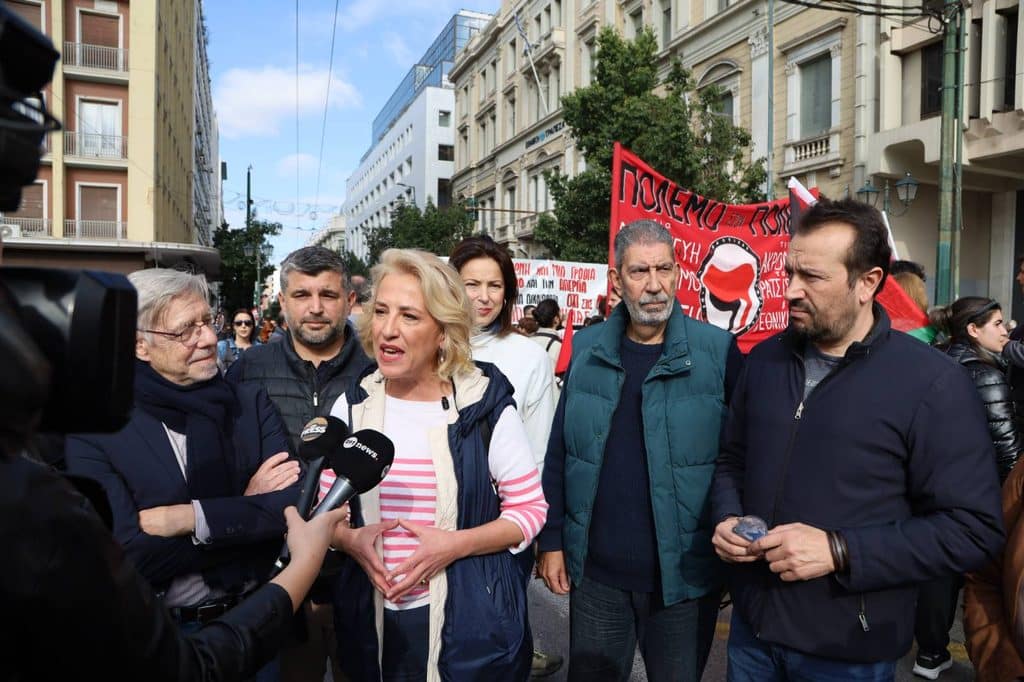
At the heart of the mobilisation were demands for substantial wage increases, the reinstatement of the 13th and 14th salaries, stronger collective labour agreements, affordable housing and adequate funding for public healthcare and education.
The strike also challenged the government’s austerity policies and the prioritisation of military expenditure over social needs, echoing the European Left’s call for “Welfare, not warfare”.
The demands raised on the streets of Athens resonate with those of workers and social movements across Europe, highlighting the need for coordinated action and stronger international trade union solidarity.
Strengthening European trade union solidarity
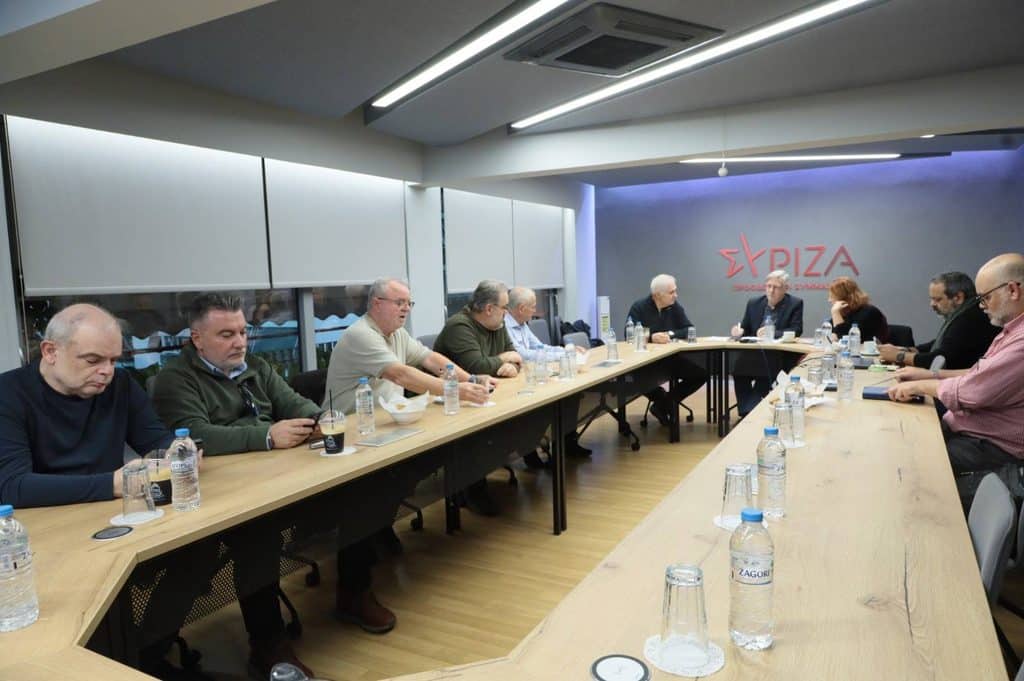
Walter Baier also met with representatives of trade union organisations, federations, labour centres and the General Confederation of Greek Workers (GSEE).
Substantial wage increases, decent pensions, affordable housing and the strengthening of the welfare state were among the central issues discussed. These challenges, Baier stressed, are shared by working people throughout Europe and require coordinated initiatives and joint action by trade unions, social movements and progressive political forces.
The discussion also addressed the particularly difficult situation facing Greek workers. The consequences of the bailout memoranda, combined with the anti-worker policies pursued by the government of Kyriakos Mitsotakis since 2019, have contributed to the erosion of labour and trade union rights, the weakening of collective bargaining and the dismantling of collective labour agreements.
Trade union representatives highlighted growing job insecurity, pressure on household incomes and the urgent need to restore effective rights and protections for working people.
Among the key demands discussed were the reinstatement of the 13th and 14th salaries for public sector employees, real increases in wages and pensions, the restoration and strengthening of collective bargaining and collective labour agreements, and effective measures to combat the rising cost of living and energy poverty.
Participants also emphasised the importance of adequate public funding and permanent staffing in healthcare and education, the protection of ordinary people’s homes, the defence of trade union freedoms and the repeal of anti-worker legislation.
A shared conclusion of the meeting was that the struggle for workers’ rights and social justice cannot be confined within national borders. A strong trade union movement, sustained mobilisation and European coordination are essential to increasing the political and social impact of workers’ demands.
Political dialogue and solidarity with Greek workers
The programme for 25 November included a meeting with Nikos Pappas, Secretary of the Central Committee of SYRIZA-PS, and Rena Dourou, President of the Central Committee.
The political dialogue between the Party of the European Left and SYRIZA-PS forms part of the EL’s commitment to strengthening cooperation among left-wing and progressive forces in response to the major political, economic and social challenges facing Europe.
Honouring the legacy of anti-fascist resistance
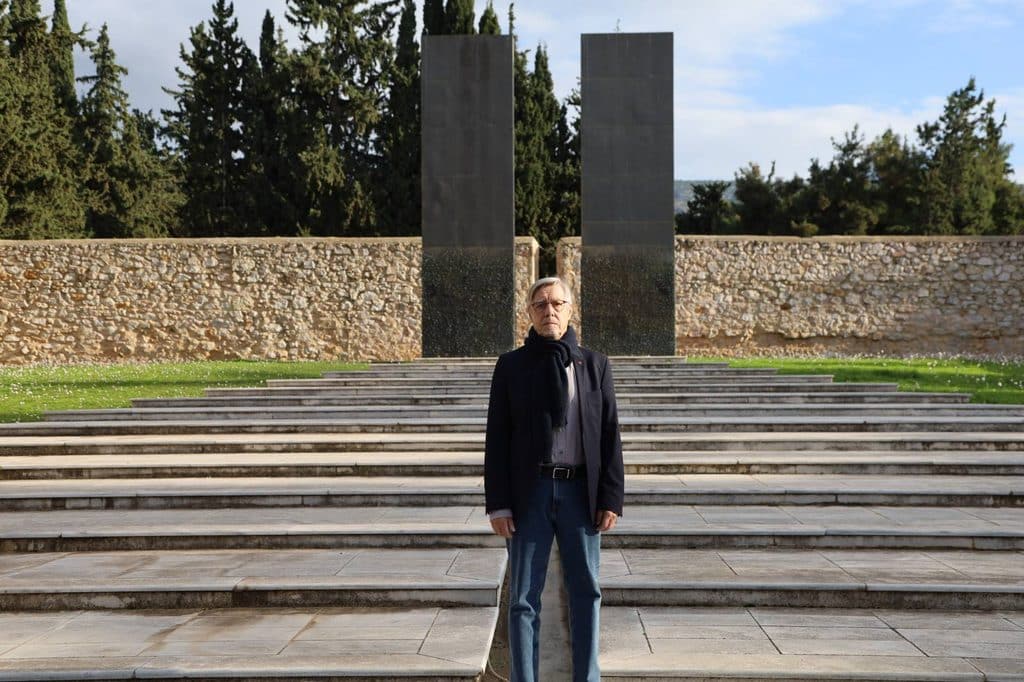
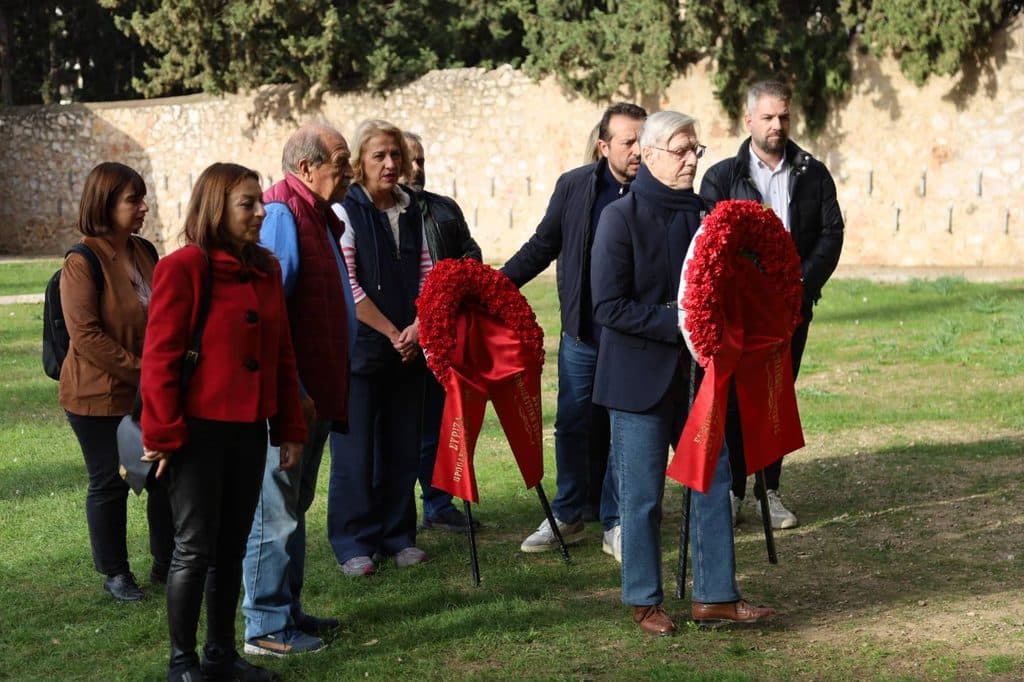
An important part of the political mission was also the tribute to the victims of fascism at the National Resistance Monument at the Kaisariani Shooting Range.
The wreath-laying ceremony was intended to honour the memory of the communists executed during the German occupation of Greece and to pay tribute to those who sacrificed their lives in the struggle against fascism.
The legacy of the resistance is a reminder of the importance of international solidarity and collective action in defending democratic rights and confronting the resurgence of reactionary political forces.
Welfare, not warfare: A different future for Europe
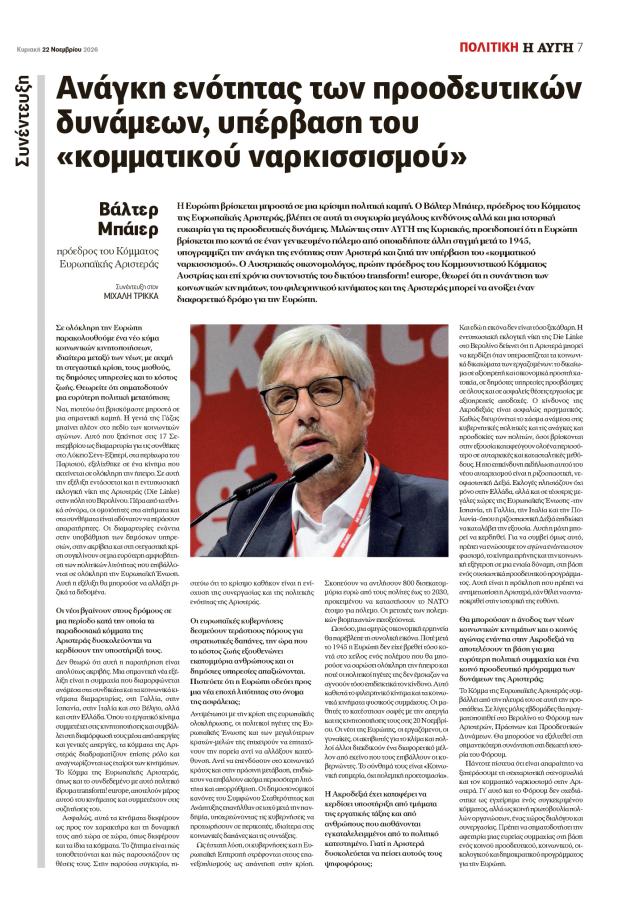
In an extensive interview with the Greek newspaper AVGI, published in connection with his visit, Walter Baier addressed the growing wave of social mobilisation across Europe, the rise of the far right, European militarisation and the prospects for greater unity among progressive forces.
The EL President described the emergence of a new generation of social activists as a major political turning point. He pointed to the convergence of struggles over housing, wages, public services and the cost of living into a broader challenge to austerity policies across the European Union.
Baier highlighted the emerging alliance between trade unions and social protest movements in several European countries, including Greece, arguing that cooperation between organised labour, young people and left-wing political forces can create new opportunities for progressive change.
He also criticised the increasing prioritisation of military expenditure at the expense of social investment, warning against a new wave of austerity justified in the name of security and defence.
“This makes the peace movement and social movements natural allies,” Baier stated, pointing to the growing demand among young people, workers, women and climate activists for a different future under the slogan “Welfare, not warfare.”
Building a broad progressive alliance across Europe
In his interview, Baier also stressed that confronting the far right requires more than electoral responses. It demands a credible progressive alternative capable of bringing together anti-fascist struggles, the peace movement and social mobilisation around a common political agenda.
Looking ahead to the forthcoming European Forum of the Left, Green and Progressive Forces in Berlin, he emphasised the need to overcome divisions and sectarianism within the Left and to create a broad space for political dialogue, cooperation and joint action.
“It must mark the beginning of a broad alliance built around a shared progressive, social, ecological and democratic agenda for Europe,” Baier said.
His political mission to Athens underlines the importance of connecting national struggles with a common European response. From the defence of collective bargaining and decent wages to the fight against austerity, militarisation and the far right, the challenges facing working people increasingly demand solidarity and cooperation across borders.
For the Party of the European Left, strengthening these connections is central to building a Europe that puts peace, democracy, social justice and the needs of people before corporate profits and military expenditure.