Walter Baier in Milan: “Never Again” Is Today
Statement by Anna Camposampiero
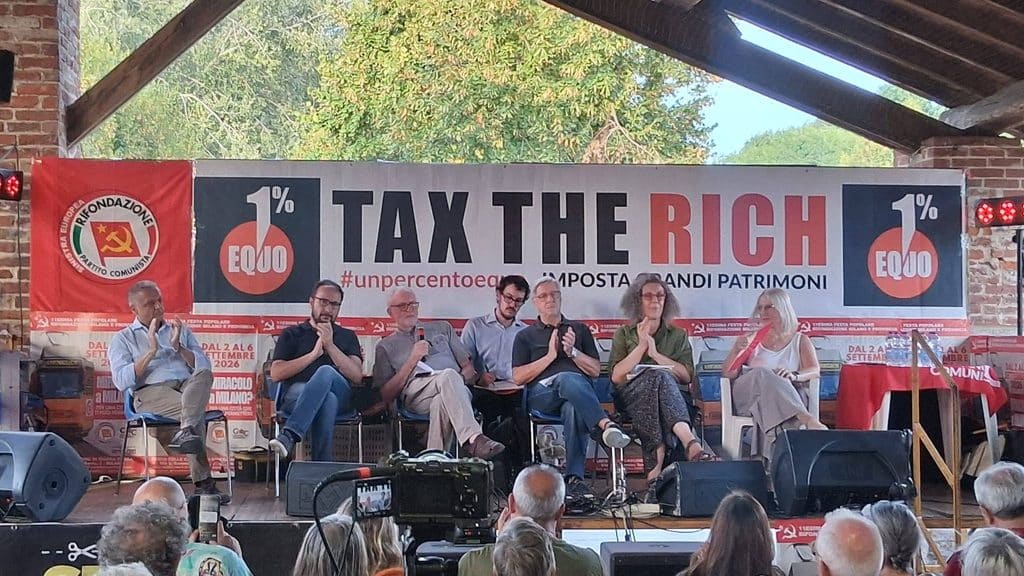
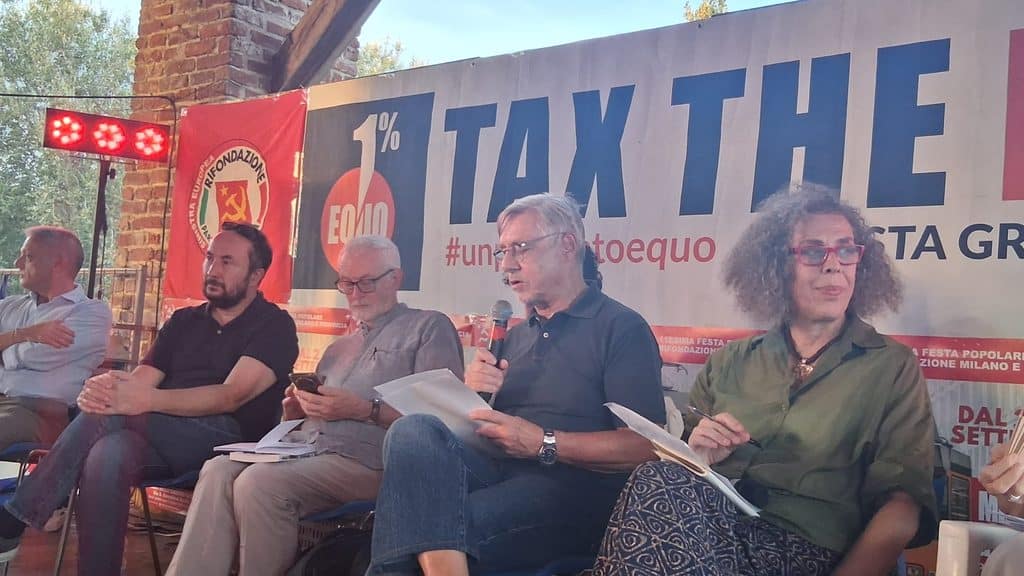
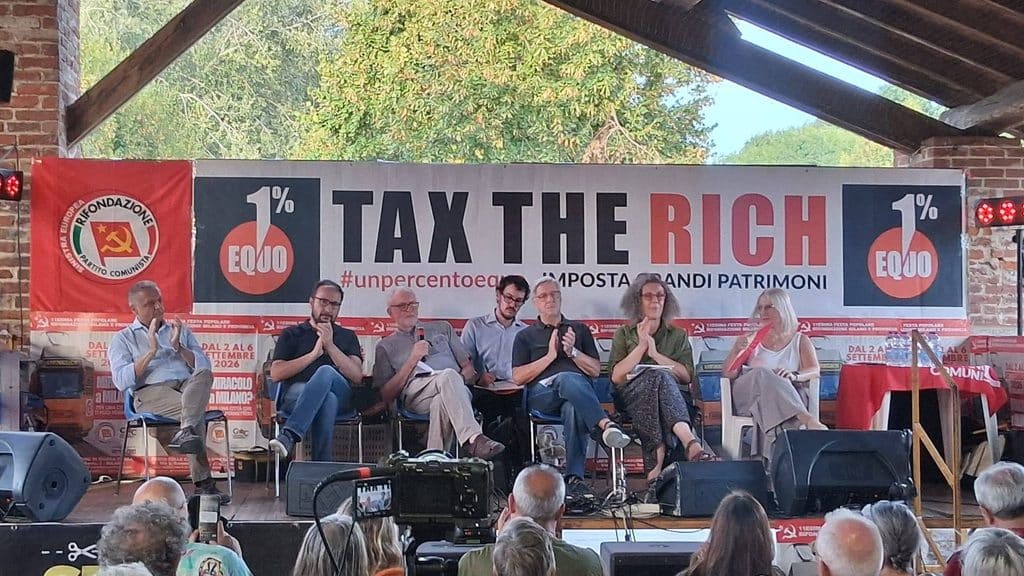
Against rearmament, for a Europe capable of building security through peace, cooperation, and social justice. This was the central theme of the event at the Rifondazione Comunista People’s Festival in Milan, featuring Walter Baier, Jeremy Corbyn, Daniela Padoan, Vincenzo Greco, and Maurizio Acerbo, held on September 5, 2026, coordinated by Anna Camposampiero, head of international relations for Rifondazione Comunista and a member of the Political Secretariat of the European Left.
“Never again is today.” Walter Baier, president of the European Left, chose a simple yet powerful phrase to open his remarks at Rifondazione Comunista’s Festa Popolare in Milan. The reference is to the promise made by Europe after World War II: never again fascism, never again war. A promise that today, according to Baier, risks being betrayed by the continent’s new arms race.
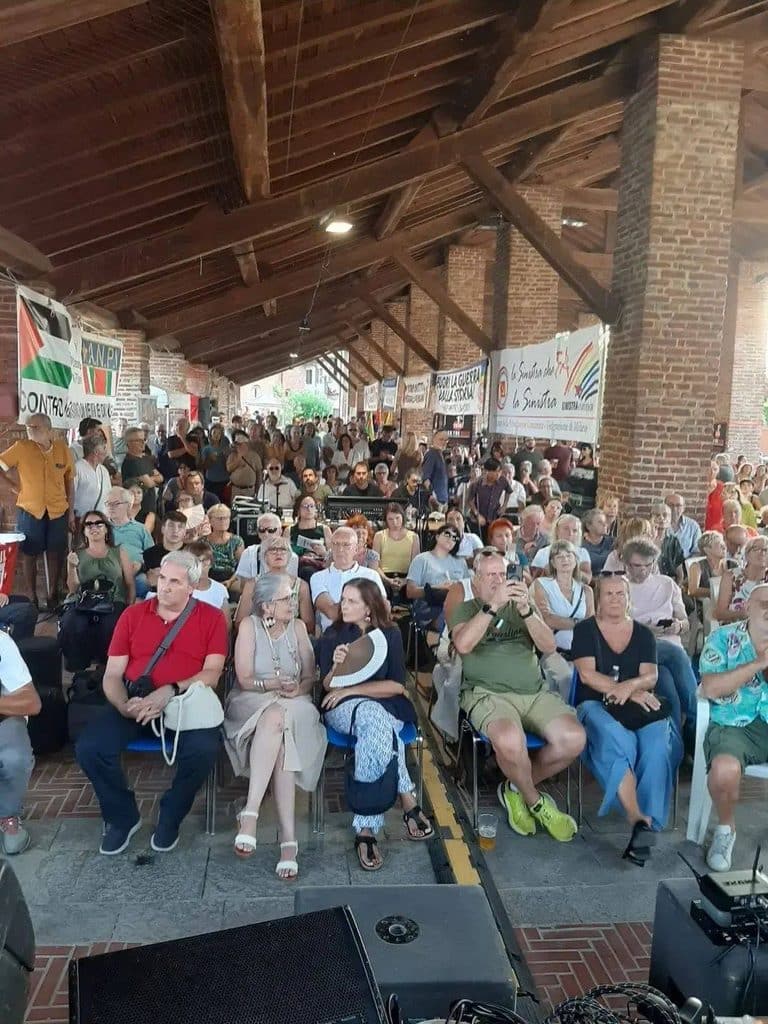
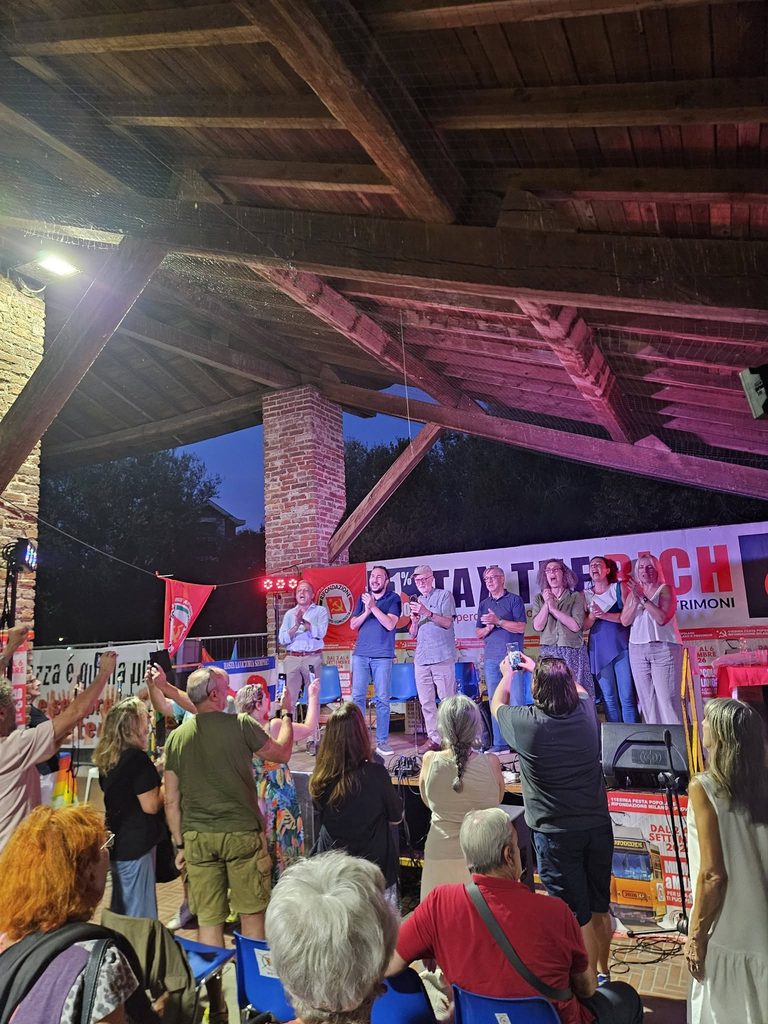
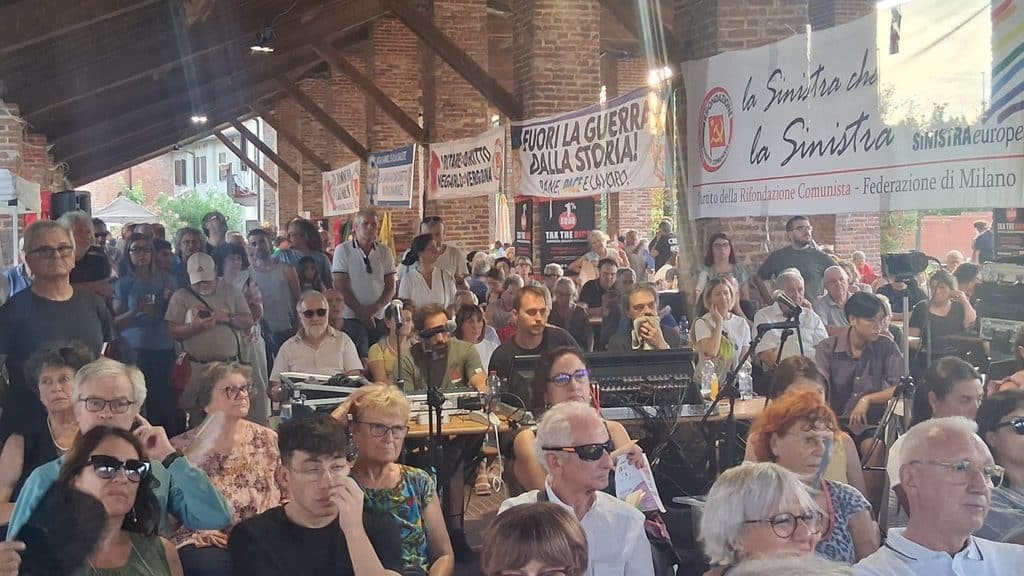
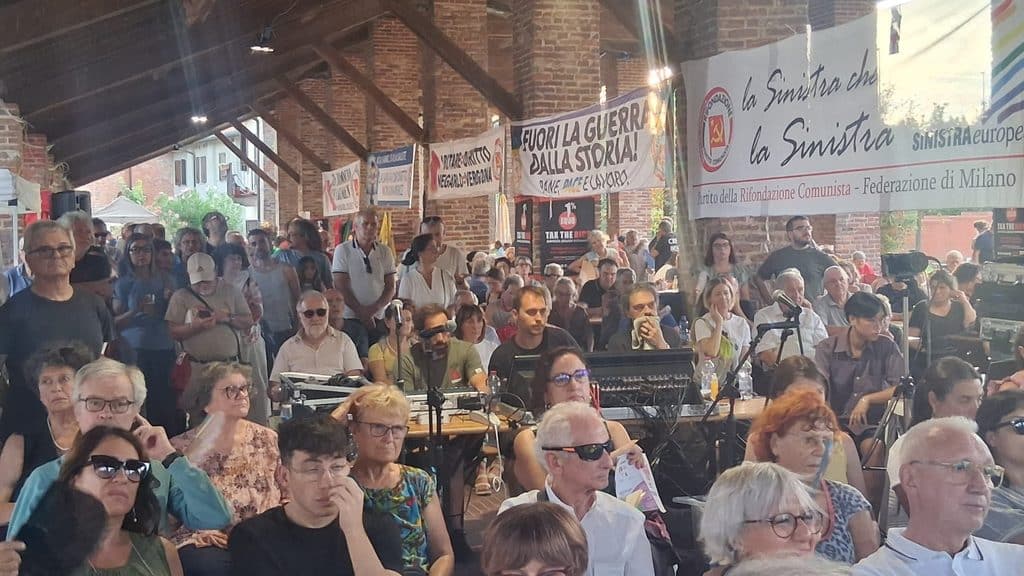
The event “Europe Rejects War: Against Rearmament, for a Europe of Peace,” held on September 5 at the Parco delle Cascine in Chiesa Rossa, Milan, brought together representatives from the political, labor, and cultural spheres. The discussion focused not only on the war in Ukraine and the role of the European Union, but also on the relationship between military spending, social welfare, labor, democracy, and international law.
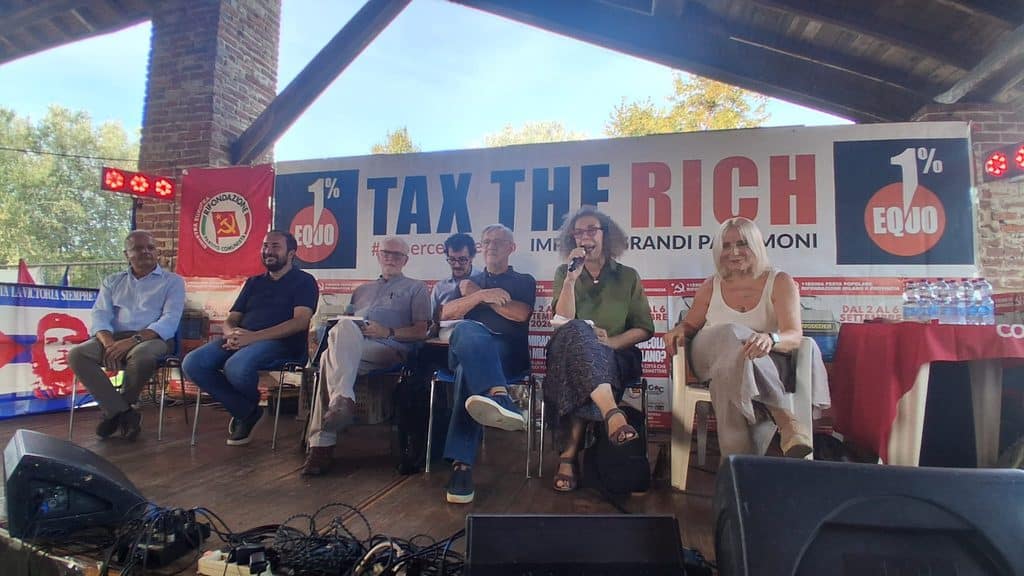
Baier fundamentally challenged the idea that European security can be achieved through a permanent increase in military spending. The 800 billion euros earmarked for European military buildup, he emphasized, do not automatically translate into greater security: *“They generate enormous profits for the arms industry,”* while diverting resources away from social needs.
This is one of the central points of his argument. Security, explained the president of the European Left, cannot be measured solely in terms of tanks, missiles, and military capabilities. Security also means stable, well-paid jobs, public health care, education, pensions, housing, and environmental protection. “*Human well-being must be a right. Not a privilege.”*
Baier’s criticism, however, does not amount to a dismissal of Russia’s responsibilities. In his speech, he reiterated that the invasion of Ukraine violated international law and that the Ukrainian people have a right to sovereignty, security, and peace. But acknowledging this responsibility, he added, does not mean absolving NATO and the West of their policies, nor does it mean ceasing to question the choices that have progressively destroyed the European security architecture built after the Cold War.
Baier’s conclusion is clear: military escalation cannot be the way out of war. *“Stop fighting. Start talking.”* Stop the fighting, resume diplomacy, and build a new common European security system. A Europe free from the logic of permanent confrontation and capable of basing its security on cooperation, disarmament, international law, and mutual security.
Jeremy Corbyn, a British Member of Parliament and former leader of the Labour Party, took a similar stance, emphasizing the link between rearmament and the crisis of the welfare state. “Welfare Not Warfare” is also Corbyn’s slogan—used for the large demonstration against rearmament held in Brussels on June 14—which encapsulates a political battle destined to become increasingly important. In Britain, he denounced, calls to increase defense spending are accompanied by pressure to cut social spending.
However, this issue is not limited to London. In Italy, too, the debate on rearmament is taking place in a country marked by significant social inequalities. According to Istat, in 2024 approximately 5.7 million people were living in absolute poverty, accounting for 9.8% of the population. In 2025, there were also approximately 13.3 million people at risk of poverty or social exclusion, representing 22.6% of the population.
It is against this backdrop that Europe’s decision to structurally increase defense spending takes on a distinct political dimension. At the 2025 NATO summit in The Hague, member states committed to reaching 5% of GDP for defense and security-related spending by 2035. The question raised by the debate in Milan is therefore simple: which needs will be sacrificed to finance this new cycle of rearmament?
Vincenzo Greco, national representative for Lavoro Società within the CGIL, described the current shift as a reversal of the historical relationship between war and the economy: we are moving from a “war economy” to a full-fledged “economy of war,” in which military spending is presented as an engine of growth. To counter this, he argued, protests alone are not enough: we need a “peace economy” project, grounded in social justice, equality, and collective freedoms.
Daniela Padoan, president of the Libertà e Giustizia association, also broadened the perspective, linking rearmament, the climate crisis, the concentration of wealth, attacks on diplomacy, and the weakening of international law. War, she noted, quoting Simone Weil, is not merely a matter of foreign policy: it is also, and above all, a matter of domestic policy.
It is precisely this connection between peace and social transformation that Maurizio Acerbo, national secretary of Rifondazione Comunista, emphasized in his speech: “There is no anti-fascism unless one opposes rearmament and war.” For Acerbo, building a movement against war also means rebuilding a popular response to the rise of the far right, grounded in solidarity among peoples and the socialist values of the Resistance.
The goal that emerged from the discussion in Milan is therefore more ambitious than simply opposing a single military spending program. It involves building a European consensus among political forces, labor unions, social movements, and associations to champion a different vision of security and of Europe.
A security based not on fear and permanent deterrence, but on rights. A Europe that chooses to invest in life rather than in war. Because, in the words with which Baier concluded his speech, “Never again” is not a promise consigned to the past: it is a responsibility that concerns the present.
Never again is today.